Redentore: Venice’s Celebration of Survival and Resilience
Venice, the city of canals, bridges, and unparalleled beauty, is renowned for its rich history and vibrant festivals. Among these, the Festa del Redentore (Feast of the Redeemer) holds a special place in the hearts of Venetians. Celebrated annually on the third weekend of July, Redentore is not only a grand festival of fireworks and feasts but also a solemn commemoration of Venice’s survival during one of the most devastating periods in its history: the plague of 1575-1577.
The Plague of 1575-1577: A Catastrophic Epidemic
The plague that struck Venice in the late 16th century was one of the deadliest in the city’s history. This epidemic, part of the second pandemic wave of the Black Death that swept through Europe, claimed the lives of nearly 50,000 Venetians, about a third of the population at the time. The plague wreaked havoc, decimating families, crippling the economy, and casting a pall of despair over the city.
The disease, caused by the bacterium Yersinia pestis, was transmitted through fleas on rats and spread rapidly in the densely populated and bustling trade hub that was Venice. Symptoms included fever, chills, vomiting, diarrhea, terrible aches and pains, and then, in short order, death. The impact was swift and severe, leaving the city in a state of emergency.
The Vow and the Basilica
Amid this dire situation, the Venetian Senate made a solemn vow to build a grand church if God delivered the city from the plague. This vow was a plea for divine intervention, a common response to plagues in the medieval and early modern periods. The Senate promised that, upon the plague’s cessation, a magnificent basilica would be constructed and dedicated to Christ the Redeemer.
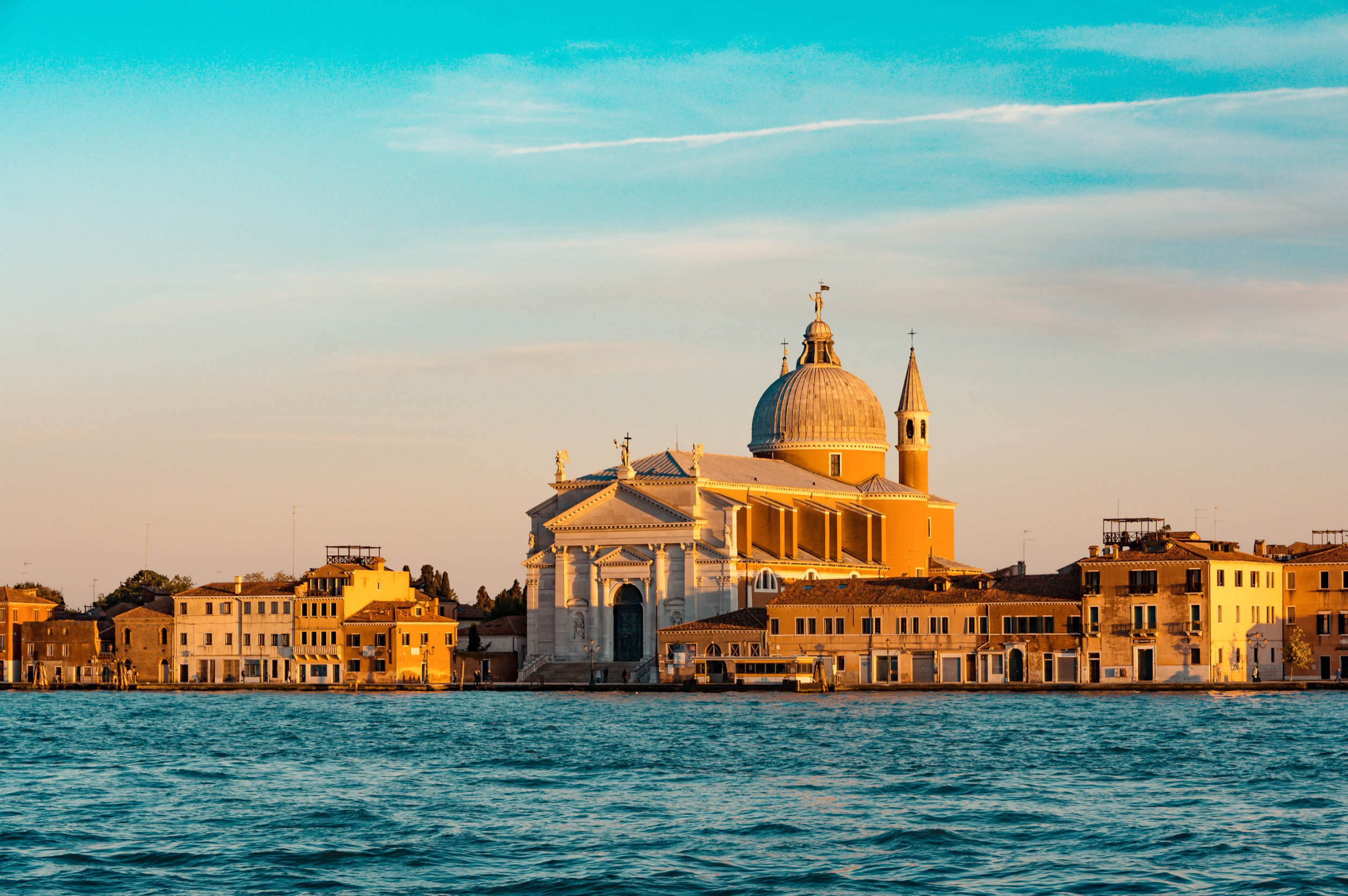
The tide began to turn in 1577, and by the end of the year, the plague had abated. True to their word, the Venetians commissioned the great architect Andrea Palladio to design the Basilica di San Giorgio Maggiore. However, the original choice of location was changed, and instead, Palladio designed the Chiesa del Santissima Redentore (Church of the Most Holy Redeemer) on the island of Giudecca. Construction began in May 1577, and the church was consecrated in 1592.
Each year a temporary bridge (shown below) is erected so that the faithful can walk to the church to give thanks. It is opened on Saturday afternoon by the local Priest and stays in place until Sunday pm late.

The Festa del Redentore: Tradition and Celebration
The completion of the Chiesa del Redentore marked the beginning of an annual tradition that continues to this day. The Festa del Redentore is a blend of solemn religious observance and exuberant celebration, reflecting the dual nature of Venice’s response to its historical trials.
The festivities begin on Saturday with the construction of a pontoon bridge connecting Venice to the church on Giudecca Island. Thousands of Venetians and visitors walk across this bridge, participating in a pilgrimage to give thanks and to pray. A special mass and a religious service are held in the church, attended by many faithful.
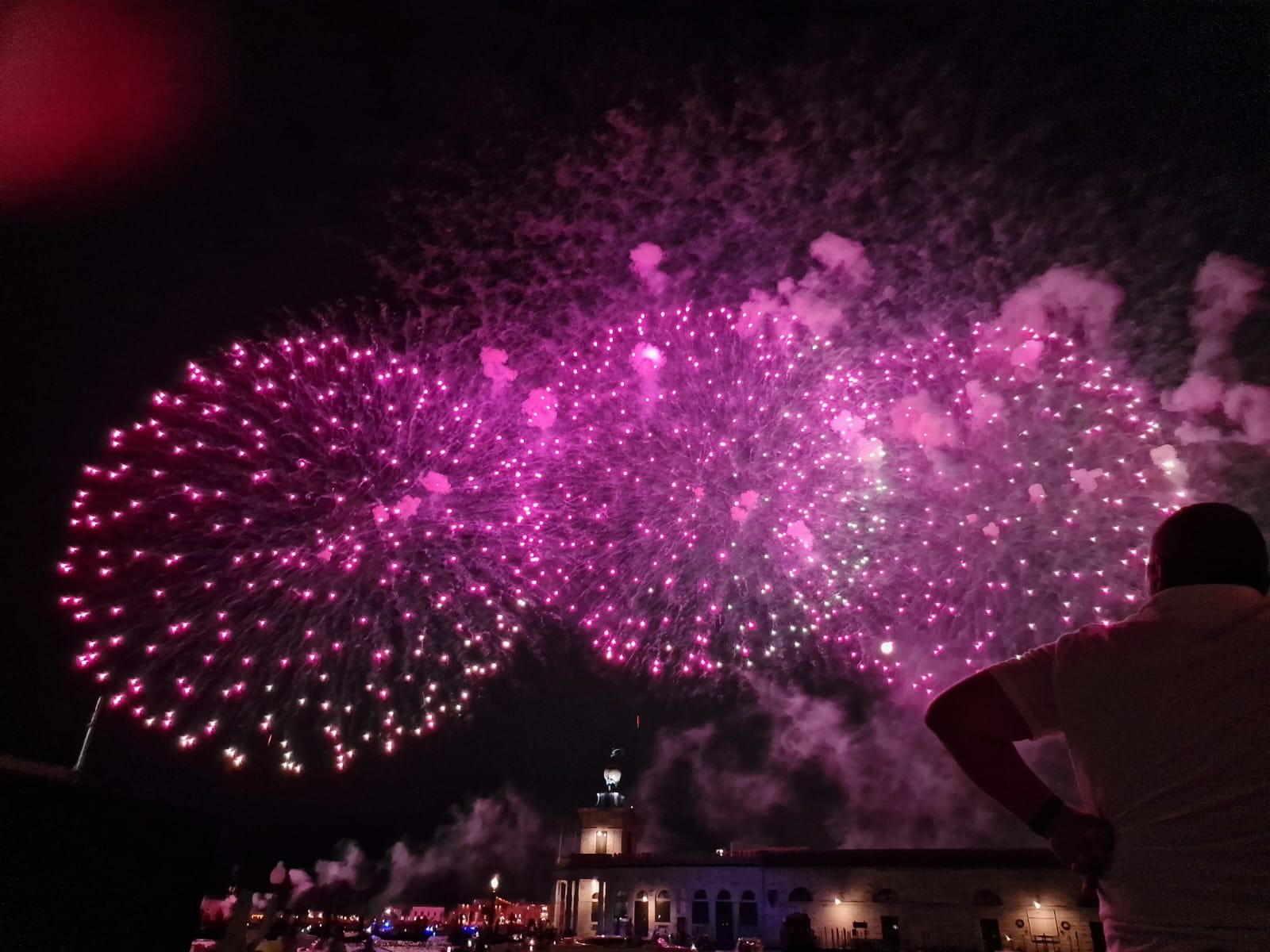
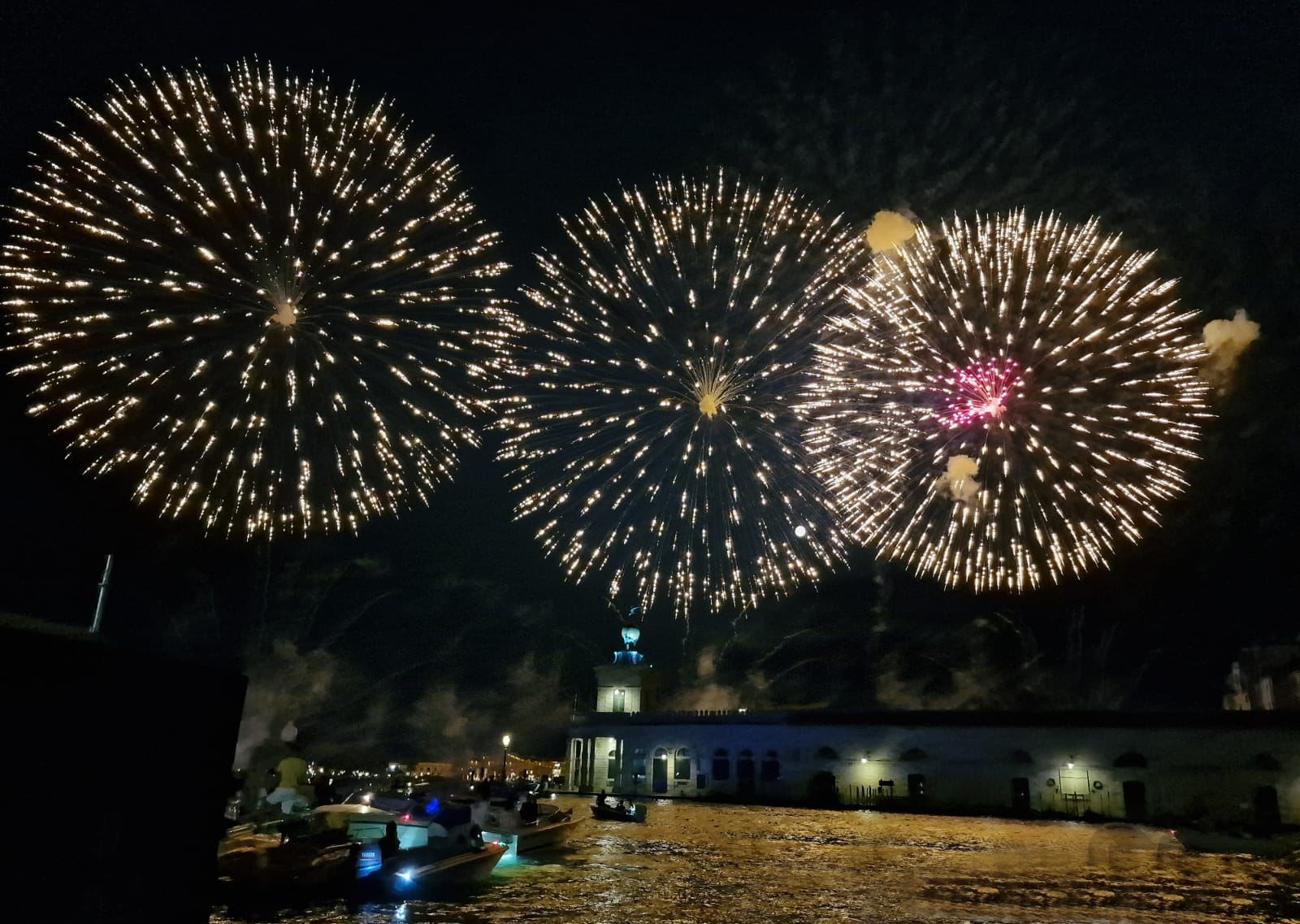
As evening falls, the atmosphere shifts from reverent to celebratory. The canals and the lagoon become a dazzling spectacle of illuminated boats, decorated with flowers and balloons. Venetians gather on boats and along the waterfront, enjoying lavish feasts of traditional dishes, music, and laughter. The highlight of the night is a breathtaking fireworks display, one of the most impressive in Italy, lighting up the sky and reflecting on the waters of the lagoon. This pyrotechnic extravaganza symbolizes the joy of survival and the beauty of Venice’s enduring spirit.

The night was even more spectacular with the full moon shining through the fireworks. The celebrations continue into Sunday with a gondola regatta, races, and various cultural events, culminating in another mass at the Redentore Church. The combination of spiritual reflection and communal joy makes Redentore a unique and profoundly meaningful event for Venetians.
Commemorating the 700th Anniversary of the Death of Marco Polo
Today, the Festa del Redentore remains a testament to Venice’s resilience and capacity for renewal. It is a time when Venetians come together to honor their history, celebrate their survival, and express their gratitude for the city’s enduring beauty and spirit. This year the city is remembering the death of Marco Polo some 700 years ago and the fireworks which he is purported to have brought to Venice in 1295 when he returned from his travels to China.
The show began with a tribute to the colors of Venice, red and gold filling the sky representing the city at sunset with its rich artistic history. Each pyrotechnic scene was characterized by different colors representing Marco Polo’s countless discoveries during his travels: the blue of the Mediterranean Sea as he left on his journey, the green of the Asian plains, the red of the spices he found. The finale was a riot of colors and shapes to represent Marco Polo’s return to Venice and his story recorded while he was imprisoned in Genoa in the memorable book Il Milione (The Travels of Marco Polo).
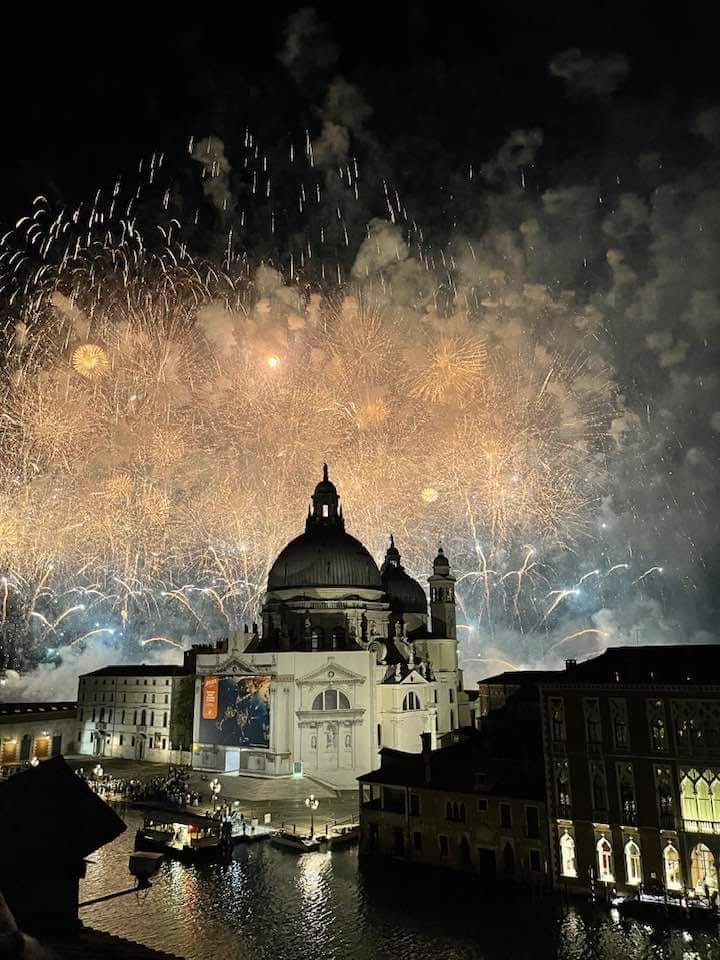
The Redentore is more than just a festival; it is a celebration of life over death, hope over despair, and community over adversity. It reminds us of the human capacity to endure and to find joy even in the face of the greatest trials. As the fireworks illuminate the night sky over the serene waters of the Venetian lagoon, they serve as a luminous tribute to the city’s past and a beacon of hope for its future.